Kyushu Small Group Tour

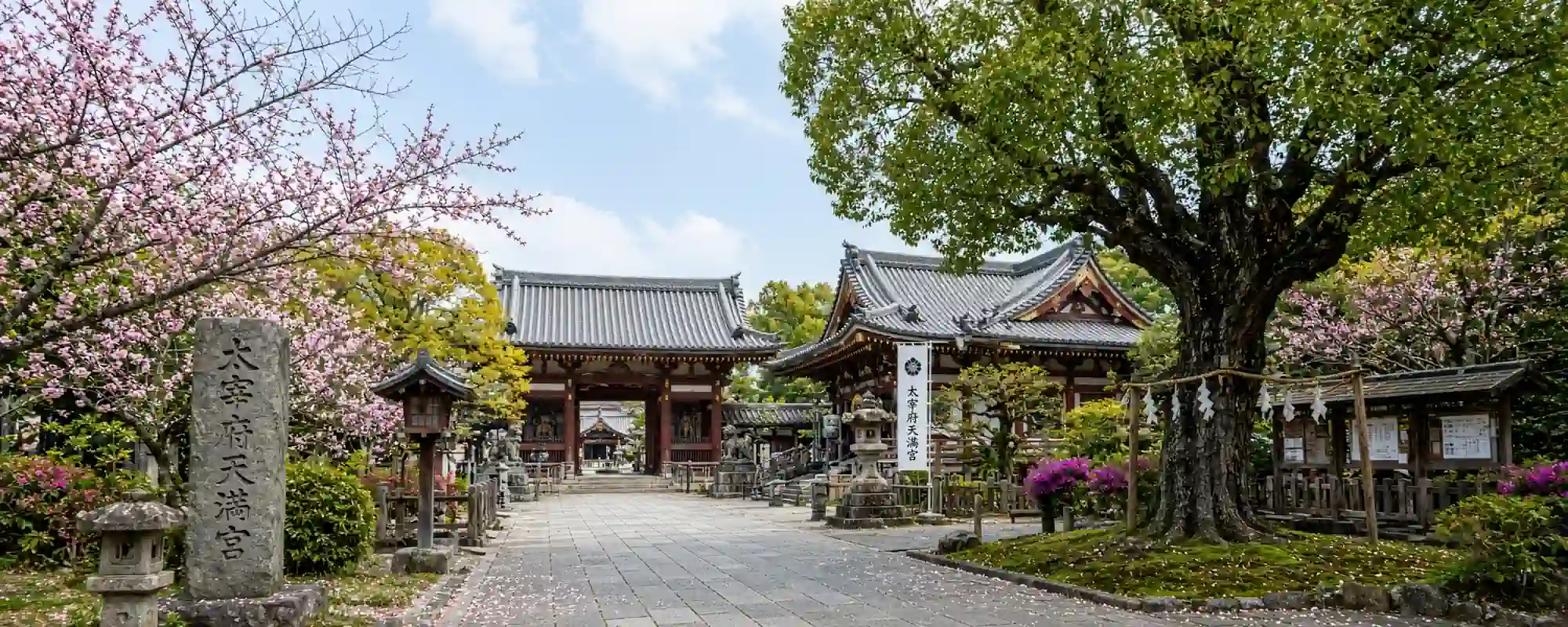
📍 Visit the 1100-year-old Dazaifu Tenmangu Shrine, dedicated to the "God of Learning" and the "God of Calligraphy."
📍 Take a boat ride on the beautiful Yanagawa Canal to experience the scenic views of this city, known as the "Water Town."
📍 Relax at the historic Unzen Hot Springs, enjoying the healing sulfur baths and beautiful scenery.

Meeting PointFukuoka Airport
Included
4 persons or above self-organized group
Local driver
Fluent Chinese-speaking tour guide
Daily Breakfast
Tickets for all the attractions listed in the itinerary
All hotels throughout the trip will be based on twin sharing for 2 people.
All hotel accommodations included in the itinerary.
Excludes
The airfare is not included
Driver and guide gratuities
Personal expenses
Customs duties for inbound and outbound luggage
Any other expenses not mentioned.
– Cost of renting a TOYOTA ALPHARD or HIACE with driver for 8 hours
– Overseas green plate tour buses or Toyota Alphard 7-seater, Hiace 10-seater / 14-seater (vehicle models are for reference only).
– Please provide your overseas contact information as well as contact information for at least one other person traveling with you. If you plan to use a local mobile phone number while abroad, please provide that number as well.
– Please try to wear comfortable clothing and shoes.
– The tour guide may make temporary adjustments to the itinerary's sightseeing order based on factors such as weather, schedule, and transportation. The guide will seek the consent of the guests before making any changes.
– Due to unforeseen circumstances such as transportation issues, weather conditions, or other force majeure events, any resulting delays, changes in the travel route, or cancellation of itinerary or attractions, the company will not be held responsible, and refunds will not be provided. We appreciate your understanding in this matter.
– Our company is not responsible for any delays in the actual end time of the itinerary due to road congestion on Saturdays, Sundays, public holidays, or peak travel periods such as Golden Week or summer vacation. We also do not assume responsibility for any losses or subsequent expenses incurred by guests as a result of unavoidable delays in the return time due to unforeseen circumstances.
– No refunds or cancellations will be accepted due to suboptimal viewing conditions at attractions caused by inclement weather.
– No refunds will be provided if a guest is unable to join the tour on the specified date due to their own personal reasons.
– Travelers are responsible for their own health and well-being. They should ensure they are physically able to participate in the tour and understand that they assume full responsibility for any personal accidents or adverse consequences.
– Travelers should exercise caution and be mindful of their personal and property safety during the tour and any self-arranged activities. Any personal or property losses incurred by travelers due to their own actions or the actions of third-party providers are the sole responsibility of the travelers. If such losses result in damages to the travel agency, the travelers will be held liable for compensation.
– Before departure, it is necessary to purchase travel insurance that includes coverage for COVID-19, as required by the entry policies of Japan.
– If a traveler decides to split from the group or deviate from the planned itinerary without authorization, they are not entitled to request any refunds from the travel agency. If the travel agency incurs any losses as a result, they have the right to seek compensation from the traveler.
– Please read the important clauses of this agreement carefully, as they pertain to the rights and interests of the traveler. By confirming, you acknowledge that you have fully read, understood, and accepted all the terms and conditions of this contract before using our services.
– As part of our service, we assist in arranging recommended unique experiences and food recommendations during the itinerary. However, please note that if a recommended establishment is closed or unavailable due to reasons such as business hours or capacity limitations, which are beyond our control, our company cannot be held responsible. We appreciate your understanding in this matter.
– Please note that in some cases, attractions may be closed or undergoing maintenance without prior notice. We appreciate your understanding in such situations. The hotels listed in the itinerary are commonly used for this tour. However, if a particular hotel is closed or fully booked, we will arrange accommodation in a hotel of similar quality. Please be aware of this possibility.
– Please make sure to be at the designated meeting point at the specified time. It is important not to be late. If you are unable to participate in the tour due to your own reasons, we cannot wait for you and no refunds or changes will be provided. If you decide to catch up with the group by taking a taxi or incur accommodation expenses, we regret to inform you that our company cannot cover those costs. We appreciate your understanding in this matter.
– If meals have been pre-arranged by our company at designated restaurants, refunds will not be provided if tour participants choose not to dine together. It will be considered an automatic forfeiture of the meal.
– During peak travel seasons such as summer holidays, cherry blossom season, and autumn foliage, popular attractions and amusement parks tend to be crowded. In such cases, our company may make necessary adjustments to the itinerary and meals based on actual traffic and sightseeing conditions, in order to ensure the smooth visitation of all destinations. We kindly request the cooperation of our guests in this matter.
– Our bus service operates until 8:00 PM each day. However, if there is a delay in the group's departure from a particular attraction due to the late arrival of guests, resulting in the need for an extended bus service, according to Japanese regulations, a fee of 10,000 Japanese yen per hour will be charged to cover the extension costs for the driver. This additional fee will be the responsibility of the guests to bear.
– In order to ensure the safety of travelers, this tour does not accept pregnant women or individuals aged 80 and above without accompanying children or direct relatives. For participants aged 65 and above, as well as those with specific medical conditions or medical history, it is essential to inform the travel agency before registration. Such participants will be required to sign a liability waiver, have a companion accompany them, and purchase accident insurance that includes overseas emergency assistance. Your cooperation in this matter is appreciated.
– If there are changes to the meeting time and place for your itinerary, we will contact you via WhatsApp, WeChat, Line, or other messaging services. Please keep an eye out for updates.
1

Day 1

Fukuoka

Upon arrival at the airport, the driver will greet the guests with a sign and drive them to the hotel for rest.

Dazaifu Tenmangu Shrine: The shrine enshrines Sugawara no Michizane, who is revered in Japan as the "God of Learning" and the "God of Calligraphy." With a history of 1100 years, it is respected across Japan. This place is considered a sacred site for praying for success in exams, with up to 7 million people visiting annually to pray and write their hopes for success on small wooden plaques.

Yanagawa Water City: Fukuoka's Yanagawa is known as "Water Town." Hundreds of years ago, moats were constructed here to protect an ancient castle. Nowadays, visitors can explore by taking a boat ride along the waterways. Yanagawa is also called the City of Water due to its numerous canals and is the hometown of the poet Hakushū Kitahara.

2

Day 2

Fukuoka > Saga > Nagasaki

Nagasaki Peace Park: The Nagasaki Peace Park was built on a hill north of where the atomic bomb exploded, as a memorial park praying for world peace. Within the park, there are facilities like the Peace Statue and the Peace Memorial Hall. The bluish Peace Statue has its right hand pointing towards the sky and its left hand extended sideways, symbolizing that only in a world free from the threat of nuclear bombs can peace be enjoyed.

Glover Garden: Glover Garden is a tourist spot located in the Minamiyamate area of Nagasaki City, Nagasaki Prefecture, Japan. It was the residence of British merchants Thomas Blake Glover, Frederick Ringer, and William J. Alt after Nagasaki opened for foreign trade in 1859. It is now listed as a World Heritage site.

3

Day 3

Nagasaki > Kumamoto

Unzen Onsen: Unzen Onsen is a hot spring located in Unzen, Obama-cho, Unzen City, Nagasaki Prefecture. It is historically significant as it was the first hot spring area designated within Japan's first national park. The area features more than 30 sulfuric acid pools, and local resorts offer hot spring water for you to soak in.

Shimabara Castle: Shimabara Castle is a Japanese-style castle located in Shimabara City, Nagasaki Prefecture, at the foot of Mount Unzen, near the Ariake Sea. Its structure is generally that of a rectangular, connected-style flatland castle, characterized by its high and sturdy stone walls.

Ferry Across the Sea: Crossing from Nagasaki to Kumamoto

4

Day 4

Kumamoto > Kagoshima

Kumamoto Castle: Also known as Ginkgo Castle, Kumamoto Castle is one of Japan's famous landmarks. The "Kumamoto Castle Ruins" are designated as a National Special Historic Site, with 13 structures including turrets, gates, and walls classified as National Important Cultural Properties. Together with Osaka Castle and Nagoya Castle, it is counted among Japan's Three Great Castles.

Suizenji Jojuen Garden: Suizenji Jojuen Garden is a famous garden located in Kumamoto City, Kumamoto Prefecture, showcasing traditional Japanese garden art.

5

Day 5

Kagoshima > Miyazaki

Senpaku Park: Senpaku Park is situated in the Iso district of Yoshino Town, Kagoshima City, at the southernmost tip of Kyushu, Japan. It was the villa and garden of the Shimazu family, lords of the Satsuma Domain, also known as Iso Garden, covering about 5 hectares. Built in 1658, the garden's style and art borrow from Chinese garden architecture techniques, notably the method of "borrowed scenery," which blends artificial decor with natural landscapes, earning it the reputation as one of the world's famous gardens. Here, you can find Japan's oldest gas lamp, the "Crane Lantern," and the Hopekaku Tower, said to have been a gift from the King of Ryukyu. In essence, Senpaku Park is like a treasure trove of history.

Udo Shrine: Facing the Nichinan Coast, the main hall of Udo Shrine is located within a cliff cave on the Pacific coast, constructed along the mountains with several entrance gates. Importantly, it enshrines the ancestral deity of the Japanese people. Legend has it that the father of Japan's first emperor was born here and was nourished by the dripping spring water from the rocks. Inside the shrine, there's the "Mother Stone," with two protrusions resembling female breasts, said to ensure smooth childbirth and ample milk for women who touch them. On the beach below the shrine, there's a turtle-shaped rock with a round depression on its back; it's believed that if men use their left hand and women their right to throw a piece of unglazed clay, a specialty of the shrine, into this hole, their dreams will come true.

Experience Sand Baths: Being buried in sand is a unique form of hot spring bathing found only in Japan.

6

Day 6

Miyazaki > Oita

Takachiho Shrine: Takachiho Shrine is located in Takachiho Town, Nishiusuki District, Miyazaki Prefecture, Japan, and is currently listed as a Beppyo Shrine by the Association of Shinto Shrines. In ancient times, it was known as "Jissha Daimyojin" or "Jissha Shrine," and in the 4th year of Meiji (1871), it was renamed "Mita Shrine."

Takachiho Gorge: Takachiho Gorge is located in Miyazaki Prefecture and is also known as the Gose River Gorge. This gorge was formed by volcanic activity from Mount Aso; about 100,000 years ago, pyroclastic flows from a volcanic eruption flowed down the then-Gose River, cooling to form igneous rock with columnar jointing. Subsequent erosion by the Gose River created the cliffs that today stand between 80 to 100 meters high and stretch for about 7 kilometers. In 1934, it was designated by the Japanese government as a "Place of Scenic Beauty" and a "Natural Monument," and on March 25, 1965, it was included in the Sobo-Katamuki Prefectural Natural Park. The most famous sight within the gorge is the Manai Falls, listed among Japan's Top 100 Waterfalls. The cliffs along the gorge are made of slightly reddish andesite, and from spring to early summer, cherry blossoms and azaleas bloom, while in autumn, the leaves turn red, offering different seasonal views throughout the year.

7

Day 7

Oita > Fukuoka

Kitsuki Castle: Kitsuki Castle is a beautiful ancient castle in Oita Prefecture, Kyushu, Japan. In this town, known as "Little Kyoto," there is a white stone castle, a castle town area called "Sandwich Street," and an ancient slope known as "Vinegar Shop Slope." These were constructed in the early Muromachi period (1393) by the samurai Kizuki Yorinao on the 30-meter-high Daizan hill.

Yunotsubo Street: Yufuin is a small town with a cozy atmosphere, where there's a main street called "Yunotsubo." It welcomes thousands of tourists daily. Strolling here, you'll find Oita-style snacks along the street, shops with various styles, and stalls brimming with exquisite goods, making this narrow street always bustling. Besides the unique boutiques, the area around Yufuin is dotted with distinctive art museums, allowing visitors to enjoy both nature and art. At the end of Yunotsubo Street lies one of Yufuin's most famous tourist spots, Lake Kinrin.

Lake Kinrin: Located in the most lively area of Yufuin, Lake Kinrin is famous for its dreamlike scenery where morning mist spreads across the lake in winter. The lake has a circumference of approximately 400 meters, with hot spring water emerging from the west side and fresh water from the east, creating a lake that is half warm and half cold. Even today, hot spring water continues to bubble up from the lake bed. The temperature difference between the hot spring and the fresh water causes a dense fog to form on the surface, making this beautiful scene more visible from September to March in the early morning.

8

Day 8

Fukuoka (Breakfast)

After breakfast, drive to the airport.


1

Day 1

Fukuoka

Upon arrival at the airport, the driver will greet the guests with a sign and drive them to the hotel for rest.

Dazaifu Tenmangu Shrine: The shrine enshrines Sugawara no Michizane, who is revered in Japan as the "God of Learning" and the "God of Calligraphy." With a history of 1100 years, it is respected across Japan. This place is considered a sacred site for praying for success in exams, with up to 7 million people visiting annually to pray and write their hopes for success on small wooden plaques.

Yanagawa Water City: Fukuoka's Yanagawa is known as "Water Town." Hundreds of years ago, moats were constructed here to protect an ancient castle. Nowadays, visitors can explore by taking a boat ride along the waterways. Yanagawa is also called the City of Water due to its numerous canals and is the hometown of the poet Hakushū Kitahara.

2

Day 2

Fukuoka > Saga > Nagasaki

Nagasaki Peace Park: The Nagasaki Peace Park was built on a hill north of where the atomic bomb exploded, as a memorial park praying for world peace. Within the park, there are facilities like the Peace Statue and the Peace Memorial Hall. The bluish Peace Statue has its right hand pointing towards the sky and its left hand extended sideways, symbolizing that only in a world free from the threat of nuclear bombs can peace be enjoyed.

Glover Garden: Glover Garden is a tourist spot located in the Minamiyamate area of Nagasaki City, Nagasaki Prefecture, Japan. It was the residence of British merchants Thomas Blake Glover, Frederick Ringer, and William J. Alt after Nagasaki opened for foreign trade in 1859. It is now listed as a World Heritage site.

3

Day 3

Nagasaki > Kumamoto

Unzen Onsen: Unzen Onsen is a hot spring located in Unzen, Obama-cho, Unzen City, Nagasaki Prefecture. It is historically significant as it was the first hot spring area designated within Japan's first national park. The area features more than 30 sulfuric acid pools, and local resorts offer hot spring water for you to soak in.

Shimabara Castle: Shimabara Castle is a Japanese-style castle located in Shimabara City, Nagasaki Prefecture, at the foot of Mount Unzen, near the Ariake Sea. Its structure is generally that of a rectangular, connected-style flatland castle, characterized by its high and sturdy stone walls.

Ferry Across the Sea: Crossing from Nagasaki to Kumamoto

4

Day 4

Kumamoto > Kagoshima

Kumamoto Castle: Also known as Ginkgo Castle, Kumamoto Castle is one of Japan's famous landmarks. The "Kumamoto Castle Ruins" are designated as a National Special Historic Site, with 13 structures including turrets, gates, and walls classified as National Important Cultural Properties. Together with Osaka Castle and Nagoya Castle, it is counted among Japan's Three Great Castles.

Suizenji Jojuen Garden: Suizenji Jojuen Garden is a famous garden located in Kumamoto City, Kumamoto Prefecture, showcasing traditional Japanese garden art.

5

Day 5

Kagoshima > Miyazaki

Senpaku Park: Senpaku Park is situated in the Iso district of Yoshino Town, Kagoshima City, at the southernmost tip of Kyushu, Japan. It was the villa and garden of the Shimazu family, lords of the Satsuma Domain, also known as Iso Garden, covering about 5 hectares. Built in 1658, the garden's style and art borrow from Chinese garden architecture techniques, notably the method of "borrowed scenery," which blends artificial decor with natural landscapes, earning it the reputation as one of the world's famous gardens. Here, you can find Japan's oldest gas lamp, the "Crane Lantern," and the Hopekaku Tower, said to have been a gift from the King of Ryukyu. In essence, Senpaku Park is like a treasure trove of history.

Udo Shrine: Facing the Nichinan Coast, the main hall of Udo Shrine is located within a cliff cave on the Pacific coast, constructed along the mountains with several entrance gates. Importantly, it enshrines the ancestral deity of the Japanese people. Legend has it that the father of Japan's first emperor was born here and was nourished by the dripping spring water from the rocks. Inside the shrine, there's the "Mother Stone," with two protrusions resembling female breasts, said to ensure smooth childbirth and ample milk for women who touch them. On the beach below the shrine, there's a turtle-shaped rock with a round depression on its back; it's believed that if men use their left hand and women their right to throw a piece of unglazed clay, a specialty of the shrine, into this hole, their dreams will come true.

Experience Sand Baths: Being buried in sand is a unique form of hot spring bathing found only in Japan.

6

Day 6

Miyazaki > Oita

Takachiho Shrine: Takachiho Shrine is located in Takachiho Town, Nishiusuki District, Miyazaki Prefecture, Japan, and is currently listed as a Beppyo Shrine by the Association of Shinto Shrines. In ancient times, it was known as "Jissha Daimyojin" or "Jissha Shrine," and in the 4th year of Meiji (1871), it was renamed "Mita Shrine."

Takachiho Gorge: Takachiho Gorge is located in Miyazaki Prefecture and is also known as the Gose River Gorge. This gorge was formed by volcanic activity from Mount Aso; about 100,000 years ago, pyroclastic flows from a volcanic eruption flowed down the then-Gose River, cooling to form igneous rock with columnar jointing. Subsequent erosion by the Gose River created the cliffs that today stand between 80 to 100 meters high and stretch for about 7 kilometers. In 1934, it was designated by the Japanese government as a "Place of Scenic Beauty" and a "Natural Monument," and on March 25, 1965, it was included in the Sobo-Katamuki Prefectural Natural Park. The most famous sight within the gorge is the Manai Falls, listed among Japan's Top 100 Waterfalls. The cliffs along the gorge are made of slightly reddish andesite, and from spring to early summer, cherry blossoms and azaleas bloom, while in autumn, the leaves turn red, offering different seasonal views throughout the year.

7

Day 7

Oita > Fukuoka

Kitsuki Castle: Kitsuki Castle is a beautiful ancient castle in Oita Prefecture, Kyushu, Japan. In this town, known as "Little Kyoto," there is a white stone castle, a castle town area called "Sandwich Street," and an ancient slope known as "Vinegar Shop Slope." These were constructed in the early Muromachi period (1393) by the samurai Kizuki Yorinao on the 30-meter-high Daizan hill.

Yunotsubo Street: Yufuin is a small town with a cozy atmosphere, where there's a main street called "Yunotsubo." It welcomes thousands of tourists daily. Strolling here, you'll find Oita-style snacks along the street, shops with various styles, and stalls brimming with exquisite goods, making this narrow street always bustling. Besides the unique boutiques, the area around Yufuin is dotted with distinctive art museums, allowing visitors to enjoy both nature and art. At the end of Yunotsubo Street lies one of Yufuin's most famous tourist spots, Lake Kinrin.

Lake Kinrin: Located in the most lively area of Yufuin, Lake Kinrin is famous for its dreamlike scenery where morning mist spreads across the lake in winter. The lake has a circumference of approximately 400 meters, with hot spring water emerging from the west side and fresh water from the east, creating a lake that is half warm and half cold. Even today, hot spring water continues to bubble up from the lake bed. The temperature difference between the hot spring and the fresh water causes a dense fog to form on the surface, making this beautiful scene more visible from September to March in the early morning.

8

Day 8

Fukuoka (Breakfast)

After breakfast, drive to the airport.


Fukuoka Trip Notes

Day 1 Fukuoka: First Day of Arrival

On a crisp early summer morning, we looked down from the plane at Fukuoka, the gateway city to Kyushu. The airport's hustle and bustle mingled with the anticipation of travelers. Dragging our luggage, we stepped out of the airport, greeted by the fresh, clean air of a Japanese summer. We drove to Dazaifu Tenmangu Shrine. This ancient shrine, dedicated to Sugawara no Michizane, the god of learning, has a history of 1100 years and attracts countless students and tourists every year to offer their prayers. Walking along the shrine's approach, we were surrounded by quaint shops selling all sorts of amulets and souvenirs. As I picked up a small wooden board and wrote my wish on it, I felt a surge of power from my devotion, as if all my efforts would be rewarded.

In the afternoon, we arrived at Yanagawa Water Town. This small town, famous for its canals, felt like stepping into an ancient painting. Drifting leisurely along the waterways in a small boat, the ancient buildings and weeping willows on both banks were reflected on the water's surface. As the hometown of the poet Kitahara Hakushu, it is undoubtedly a place brimming with poetic charm. Dinner was served at a restaurant; the dishes were exquisite and flavorful, allowing us to experience Fukuoka's culinary culture.

Day 2: Fukuoka > Saga > Nagasaki: A Dialogue Between Peace and History

In the early morning in Fukuoka, sunlight streamed through the curtains into the room. We enjoyed a sumptuous breakfast prepared by the hotel before driving to Nagasaki. Our first stop was Nagasaki Peace Park, a park built to commemorate the atomic bombing, silently recounting a heavy chapter in history. A peace memorial statue stands in the center of the park, its right hand pointing to the sky and its left hand outstretched, symbolizing a prayer for peace. We stood there, quietly feeling that yearning for peace. Next, we visited Glover Park. This was once the residence of the British merchant Glover and his friends, and is now a World Heritage Site. Walking through Glover Park, the well-preserved Western-style buildings made us feel as if we had stepped back into 19th-century Nagasaki. The park was filled with blooming flowers, a beautiful sight that made us marvel at the intertwining of history and beauty.

Day 3 Nagasaki > Kumamoto: The Charm of Hot Springs and Castles

After breakfast, we visited Unzen Onsen. This place boasts over 30 sulfuric acid baths and was Japan's first designated national park. Soaking in the hot spring waters provided immense relaxation for our tired bodies and minds. The rising steam from the hot springs and the picturesque surrounding scenery made it a truly unforgettable experience. In the afternoon, we visited Shimabara Castle. This Japanese-style castle, located at the foot of Mount Unzen, is characterized by its high and sturdy stone walls. The castle's exhibitions showcase a wealth of historical artifacts, providing a deeper understanding of Japan's Sengoku period. In the evening, we took a ferry across the sea to Kumamoto. The ocean, shimmering under the night sky, was breathtaking.

Day 4: Kumamoto > Kagoshima: A Symphony of Famous Castle and Nature

After enjoying a sumptuous breakfast at the hotel, we first visited Kumamoto Castle. This castle, renowned as one of Japan's three most famous castles, is breathtaking in its grandeur and sturdiness. Known as the "Ginkgo Castle" for its numerous ginkgo trees, its ancient architecture blends beautifully with the modern city, creating a picturesque scene where history and modernity intertwine. Afterwards, we visited Suizenji Jojuen Garden. This daimyo garden is famous for its exquisite design and abundant plant life. The ponds and the underground streams of Mount Aso complement each other, while the hills, pumice stones, lawns, and pine trees are arranged in a harmonious and picturesque way, making one feel as if they are in a natural art gallery.

In the afternoon, we arrived at Ebisu Highlands. This place is renowned for its primeval forests and volcanic dammed lakes, and is the highest hot spring resort in Kyushu. The susuki meadows in autumn bring a special tranquility and beauty. Finally, we visited Kirishima Shrine, an ancient shrine enshrining the deity Nyanokiri-no-Mikoto. With its long history and towering ancient trees surrounding the shrine, it evokes a sense of solemnity and sanctity.

Day 5 Kagoshima > Miyazaki: The beauty of gardens and shrines

After breakfast, we visited Sengan-en Garden. This villa and garden, once belonging to the lord of the Satsuma Domain, is famous for its borrowed scenery. The "Crane Lantern" and the Wangyue Tower, presented by the King of Ryukyu, perfectly showcase the harmonious blend of history and nature. Walking through the garden felt like a dialogue with history with every step. Next, we went to Pelican Shrine. This shrine, built against a mountain, enshrines the ancestral deity of the Japanese people. The Mother Jewel within the shrine is said to help women have a smooth childbirth, and the turtle-shaped stones are said to grant wishes. In the afternoon, we experienced a unique Japanese sand hot spring; the sauna in the sand provided an unprecedented sense of relaxation.

D6 Miyazaki > Oita: A fusion of mythology and nature

After breakfast, we visited Takachiho Shrine. This ancient shrine, designated as a Beppeiban Shrine by the shrine's main hall, is renowned for its rich history and cultural heritage. Next, we went to Takachiho Gorge. This gorge, formed by volcanic activity, attracts countless visitors with its magnificent cliffs and waterfalls. Walking along the gorge's trails, the andesite cliffs on both sides, along with the cherry blossoms in spring and the red maple leaves in autumn, made us truly appreciate the grandeur and beauty of nature.

Day 7 Oita > Fukuoka: The Charm of Ancient Castles and Hot Springs

After breakfast, we first visited Kinoshita Castle. This ancient castle in Kyushu is famous for its white stone castle and old streets. The sandwich street and vinegar-house slope in the castle town exude a rich historical atmosphere. Afterwards, we strolled along Yutsubo Street in Yufuin. This lively street, filled with charming shops and unique art galleries, was a delight to behold. Finally, we arrived at Lake Kinrin. This lake, renowned for its winter morning mist scenery, allowed us to experience tranquility and beauty in the embrace of nature.

D8 Fukuoka: A Moment of Farewell

On the last day of our trip, we enjoyed our final breakfast in Fukuoka. We drove to the airport. Every journey is a precious memory; I look forward to our next encounter.


伏見稻荷大社千本鳥居:Travel MaMa 深度旅遊私人小包團必訪的日本經典景點,展現「8天 九州小包團 | 太宰府天滿宮、熊本城」行程中壯麗的紅鳥居景觀,為您的文化探索之旅增添一份神秘與歷史韻味。