
Six days and five nights in Bhutan: Route A or Route B? Start with classic Route A if it’s your first visit and you want more time in Paro, Thimphu and Punakha. Pick Route B if Gangtey, mountain valleys and ecology are priorities. Both include Tiger’s Nest, but Route B adds the Phobjikha Valley in the same number of days, so compare the pace.
How do the two six-day routes differ?
Route A · Three classic stops
Paro, Thimphu and Punakha. For first-time visitors who want to focus on cultural highlights.
Route B · Gangtey and the valley
Paro, Thimphu, Gangtey and the Phobjikha Valley, and Punakha. For travellers who want time for valley scenery and ecology within six days.
Both routes include: Tiger’s Nest, a Chinese-speaking guide and a private vehicle. Check the product page and confirmed itinerary for the arrangements.
Decide whether more time in the three cities or a visit to Gangtey and Phobjikha matters most. Then consider your group’s walking ability and the available dates.
Route A: the three classic stops on a first visit
Bhutan Route A product page starts and ends in Paro, with Thimphu, Punakha and Tiger’s Nest in between. This suits travellers interested in dzongs, chortens and city life, with time to adjust to the local pace. Allow for intercity drives and a hike to Tiger’s Nest, and tell the team how far your group is comfortable walking.
Route B: Gangtey and Phobjikha Valley
Bhutan Route B product page adds Gangtey Monastery, Phobjikha Valley and the Black-necked Crane Visitor Centre. It combines culture and valley scenery within the same holiday. The visitor centre visit doesn’t guarantee sightings of wild cranes, which depend on the season and local conditions.
What should you check about flights and the itinerary?
Both products list fixed departures. Provide your available dates, group size, rooming and hotel preferences so the team can check seats. The products list Hong Kong–Paro return economy flights, Bhutan visa/TDF, five nights’ accommodation, a Chinese-speaking guide, a private vehicle and the meals and visits specified. Discuss insurance and individual needs on confirmation.
The departure is listed as Hong Kong to Paro nonstop. The return makes a technical stop in Bagdogra, India, without passengers disembarking. Use the final flight details from the airline and Travel Mama.
Which day is the main difference?
Days 1 and 2: Both routes fly to Paro from Hong Kong and transfer to Thimphu. The next day covers the Buddha statue, memorial chorten, crafts and markets. The sequence may change with flight timings and local arrangements.
Day 3: Route A travels to Punakha for Chimi Lhakhang, Punakha Dzong, the suspension bridge and a blessing ceremony. Route B adds Gangtey Monastery, Phobjikha Valley and the Black-necked Crane Visitor Centre en route to Punakha. Pick A for more time at Punakha’s cultural sites, or B if the valley justifies the extra driving.
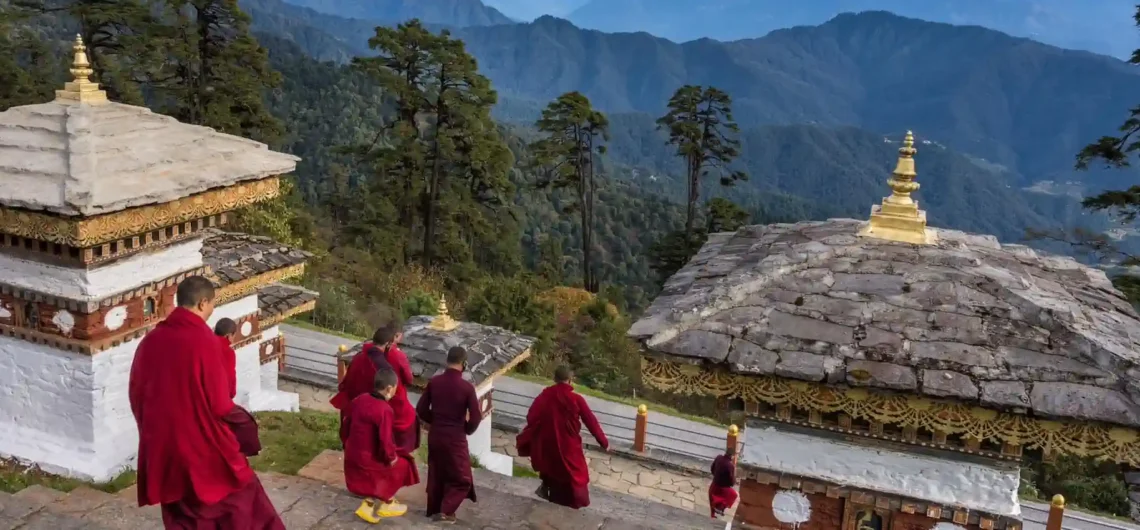
Days 4–6: Both routes return towards Paro via Dochula Pass, hike to Tiger’s Nest on day five and transfer to the airport on day six. Route B keeps Tiger’s Nest and adds the valley. Ask about day-three drive times, stops and breaks if your group wants to limit time in the car.
How do group size and hotels affect the trip?
Groups of two and four have different vehicle and room needs. Both routes specify private transport, and Route B also lists vehicle types by party size. Families can mention luggage, connecting rooms or same-floor rooms and how long they can comfortably travel each day. Discuss hotel location, class and room allocation before confirming.
Both routes involve driving, a hike and religious sites. Ask how long each day-three stop takes, when you’ll eat and rest, and what may change in bad weather. Route B crosses through Gangtey and Phobjikha on the same day, so check that the pace works for everyone.
How should you prepare for Tiger’s Nest and religious sites?
The shared highlight is an uphill hike. Bring well-fitting shoes, a warm layer and water, and pace the walk to suit your group. The products list walking poles and an optional pony ride partway up. Expect to walk the remaining section based on conditions and tell the team about mobility or health needs.
Wear sleeves and long trousers or a long skirt at temples and dzongs. Layer up for cool mornings, evenings and mountain passes. Follow the guide and signs for photos, footwear and where to walk.
What should you tell Travel Mama when you enquire?
- Two or three possible departure dates, and whether you’re restricted to specific holidays.
- Adult and child numbers, preferred room allocation and any single rooms.
- Whether you prefer Route A or B, and whether Gangtey is essential.
- Walking ability, dietary needs and preferred hotel class.
- Flights, optional activities and timings you want to confirm.
Give the team these details together so they can suggest the right route. Use the confirmed itinerary and flight details for your bookings.
Frequently asked questions
Can we choose any departure date?
Both six-day, five-night products list fixed dates. Check those dates first and confirm flights and accommodation for your holiday period.
Do we have to walk up to Tiger’s Nest?
Both tours include Tiger’s Nest. A pony may take you partway where offered. Ask how much walking is involved and decide based on conditions and fitness.
Which route suits a first visit?
Choose A for a straightforward introduction to Paro, Thimphu and Punakha, or B if Gangtey and Phobjikha are priorities. Consider your dates, walking ability and tolerance for longer drives.
Next steps: Check classic Route A and Gangtey Route B for the latest itinerary and fixed dates, or browse the Travel Mama private-tour directory。