
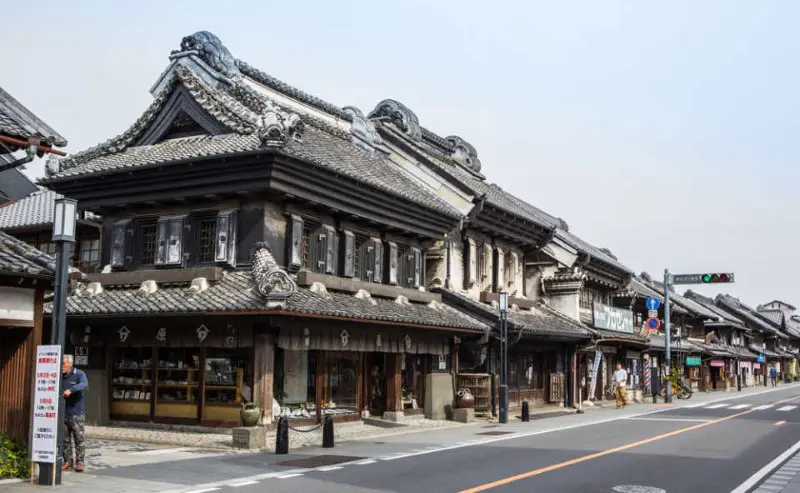
Kawagoe: Temporarily escape the hectic pace of Tokyo and slow down to experience the tranquility and leisure surrounding the city. Many towns in Japan still retain their traditional cultural atmosphere, but none are closer to Tokyo than Kawagoe. Often called "Little Edo," Kawagoe boasts numerous temples and historic streets, perfectly preserving the historical and cultural traditions of Japan's Edo period. It has many century-old shops and old residences, allowing you to truly feel the Edo atmosphere. Every year on the third Saturday and Sunday of October, the grand "Kawagoe Festival" is held. Karuizawa is a famous summer resort in Japan. It also attracts many celebrities and members of the upper class, making it one of Japan's most famous and luxurious villa destinations. Karuizawa's hot springs and beautiful autumn foliage are also major attractions.
Kawagoe, an ancient town known as "Little Edo"
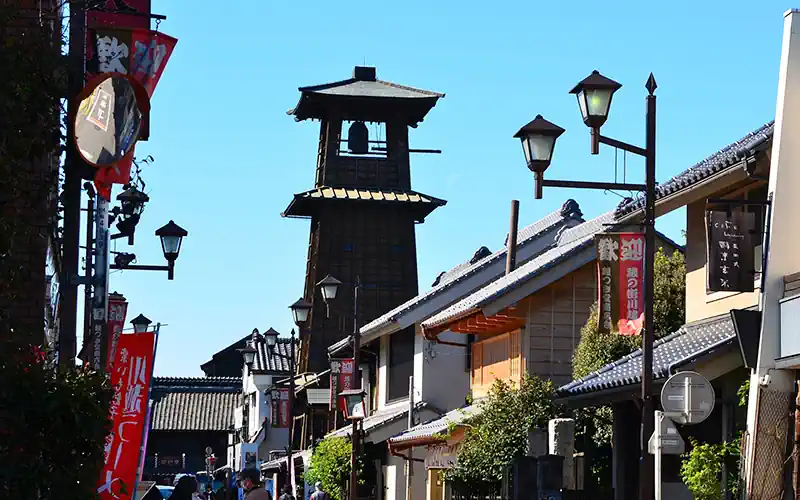
Kawagoe City, located in central Saitama Prefecture, has a population of approximately 340,000. It originated as a "castle town" (a town that developed around the residence of a feudal lord) during the 17th-century Edo period. The city is characterized by its rows of luxurious, warehouse-style shops, and is designated a Preservation District for Traditional Buildings. Due to its unique urban layout, it is also known as "Little Edo." The large bell commissioned by the former lord of Kawagoe Castle in the 17th century has been rebuilt; the current bell is the fourth restoration, and it, along with the warehouses scattered throughout the city, has become a symbol of Kawagoe.
How do I get to Kawagoe?
Taking the tram:
From Omiya Station, take the JR Kawagoe Line for about 20 minutes and get off at Kawagoe Station.
From Ikebukuro Station, take the Tobu Tojo Line express train for about 30 minutes, then get off at Kawagoe Station.
{From Shinjuku Station} JR Saikyo Line (Shinjuku Station) Rapid train: approximately 50 minutes; Seibu Shinjuku Line (Seibu Shinjuku Station) Limited Express: approximately 45 minutes. Get off at Kawagoe Station.
From Yokohama Station, take the Tokyu Toyoko Line or Tokyo Metro Fukutoshin Line for approximately 78 minutes and get off at Kawagoe Station.
From Seibu Shinjuku Station (below the Prince Shinjuku Hotel), take the Seibu Shinjuku Line to its final stop, Hon-Kawagoe. Limited Express ticket: ¥890, travel time: 45 minutes. Ordinary ticket: ¥480, travel time: 90 minutes. The Seibu Shinjuku Line is a private railway; JR Passes are not valid there. If taking JR (National Railways), take the JR Saikyo Line and get off at Kawagoe-shi Station, not Kawagoe Station. Otherwise, you'll have to walk for an additional 20 minutes.
From either Honkawagoe Station or Kawagoe City Station, it's a 10-minute walk to Kashiya Yokocho. Free tourist maps are available along the way. It's a great option for a short day trip from Tokyo.
Like many small towns in Japan, the main street in front of the station is a major thoroughfare, which also serves as the town's main shopping street. Along the quiet street are old houses with black tiles and gray bricks dating back to the Taisho era. With over a hundred years of history, they've been maintained as shops for generations, and look newer and cleaner than decades-old buildings in Hong Kong. It truly evokes a feeling of "love calling from the center of the world."
A ten-minute walk along this shopping street will take you to Kashiya Yokozo, a place Rie often mentions. In the early 19th century, during the Edo period, this area was famous in the Kanto region for its handmade sweets. At its peak in the early Showa era, Yokozo boasted over seventy sweet shops. After World War II, mechanized production took over, and Yokozo faded into obscurity. Now, only a dozen or so historical shops remain on this 100-meter-long street.
A few things you absolutely must experience when visiting Kawagoe!
Experience 1: Rent a kimono and take a walk in the ancient town of Kawagoe, known as the "Little Edo".
Wearing a kimono makes you feel like a star, radiant and dazzling. It's as if you've traveled back in time.
Cost: 2800 yen for women, 3600 yen for men; Experience time: 10:00-17:00
Experience 2: Visiting the Hikawa Shrine
“Hikawa Shrine is also known as Musashi Ichinomiya. "Musashi" is the name of a place before the Edo period. Founded in 473 BC, it is one of the oldest existing shrines in Japan. During its annual grand festival, the Imperial Family dispatches an imperial envoy to participate in the solemn ceremonies. With a history spanning over 2000 years, it attracts numerous visitors every New Year's Day, who come to pray for happiness and peace in the coming year.
Experience 3: Enjoying eel rice
Recommended restaurant: Ogakiku, 3-22 Nakacho, Kawagoe City, Saitama Prefecture 350-0065
Eel, called うなぎ (UNAGI) in Japanese, is a long fish found in rivers and is one of the few dishes that can leave you with a lasting impression.
Mama's Editor's Conclusion
Kawagoe, which we've introduced, preserves the charm of Japan's Edo period. Its typical old-town scenery, coupled with a rich historical background, truly invites you to slow down and savor the experience. If you also appreciate this kind of Japanese old-town culture, then consider planning a trip to Kawagoe to experience a different side of Japan.