
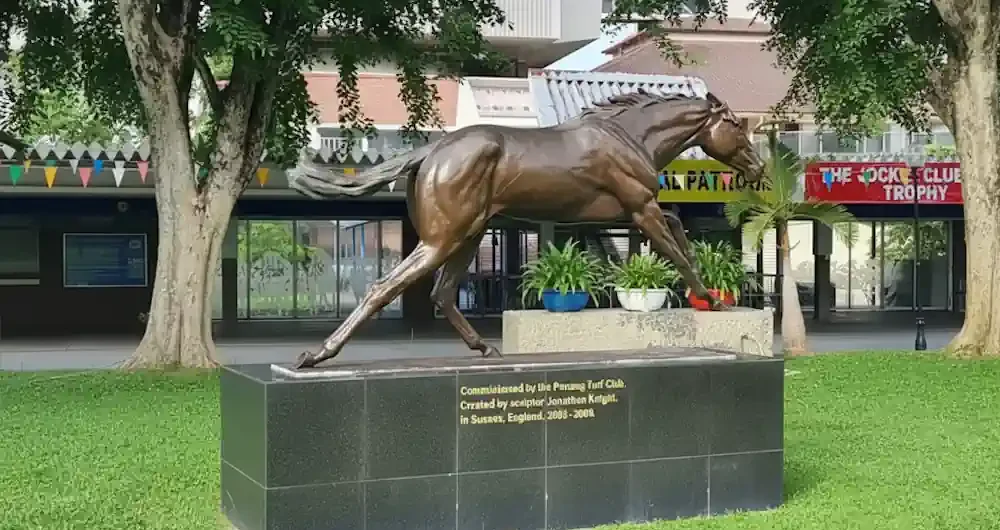
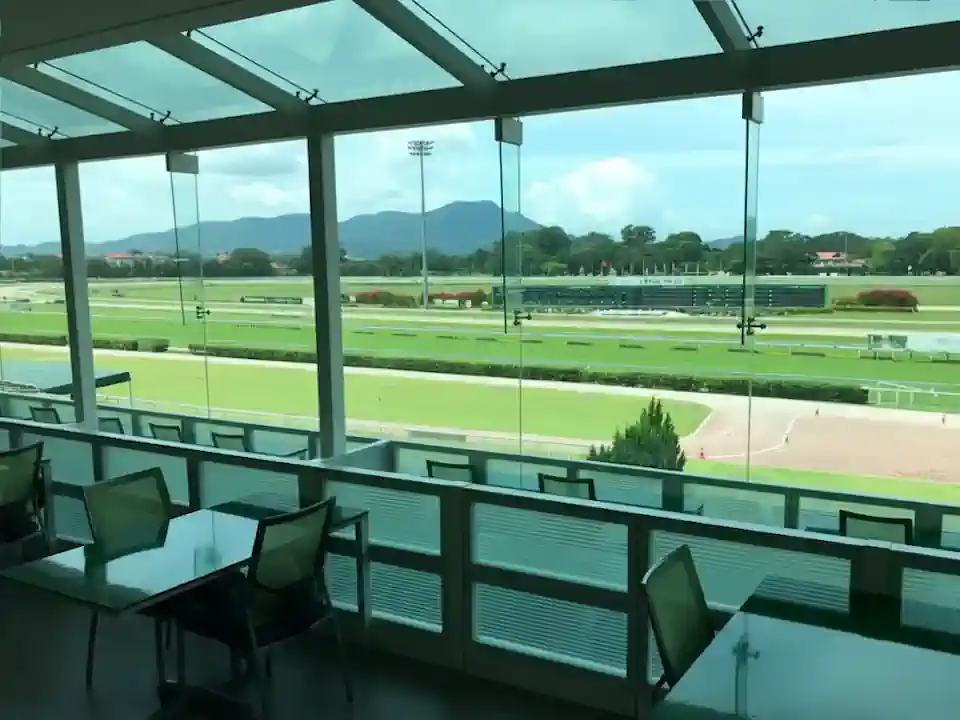
When Ipoh is mentioned, many people might think of white coffee, bean sprout chicken, or the train station known as the "Mini Tower." However, in this city surrounded by mountains, there is another place revered as a mecca by horse racing enthusiasts: the Perak Turf Club. Located south of Ipoh city center on Jalan Raja Di Hilir, this racecourse boasts a long history and frequently hosts important races such as the Perak Derby, the Perak Coronation Cup, and the Sultan's Cup. The racecourse is spacious, with a 7,874-meter-long turf track that can accommodate approximately 20,000 spectators. The grandstand area also features restaurants and food stalls for diners.
History and Present: The Legend of the Horse Racing Tracks from Taiping to Ipoh
Perak Racecourse did not originate in Ipoh. As early as the late 19th century, the British established a racecourse in Taiping, and the Perak Racing Club was founded in 1884, with over 250 members by the early 20th century. With Ipoh's rapid development due to tin mining, the club moved to its current location in the city center in the 1930s. The racecourse is currently affiliated with the Malaysian Local Racing Association and is one of Malaysia's three major traditional racecourses, along with Penang and Selangor racecourses. Today, in addition to horse racing, Perak Racecourse also houses an equestrian training center and a flea market, attracting families with young children on weekends to watch races, go treasure hunting, take photos, and enjoy local snacks.
The racecourse is open Monday through Friday from 8:00 AM to 4:30 PM, Saturday from 8:30 AM until the end of the last race, and Sunday from 10:30 AM. Tickets are affordable; you can simply purchase them at the entrance. If you don't want to bet, you can simply sit in the stands and enjoy the thrill of the races, listen to the enthusiastic cheers of the local fans, and experience the rich "racecourse culture."
Food and Entertainment: Delicious food both inside and outside the racecourse
Feeling hungry while watching the horse races? The racecourse features restaurants and numerous food stalls, where the aroma of grilled chicken wings, satay skewers, and Malay fried noodles fills the air during the races. Pair it with an ice-cold beer or white coffee for the perfect experience. White coffee is Ipoh's most famous drink, made from coffee beans roasted with palm oil and margarine, offering a rich and smooth flavor that's considered synonymous with Ipoh. For authentic local cuisine, head to Lao Wong Bean Sprout Chicken in the city center. Enjoy chicken served with plump bean sprouts irrigated from clear mountain spring water, drizzled with soy sauce and sesame oil. Or try the rich Ipoh chee cheong fun: often served with sweet sauce, chili sauce, and dried shrimp sauce, or with curry pork skin and curry pork intestines. A piping hot claypot chicken rice dish arrives with a fragrant, caramelized bottom, topped with salted fish and Chinese sausage—guaranteed to satisfy even the most discerning palate.
Ipoh Railway Station: The "Little Taj Mahal" of the colonial era
Not far from the racecourse lies Ipoh Railway Station, one of the most iconic buildings in the area. Originally built to accommodate the booming tin mining industry and population growth, the early wooden station was constructed in 1897. In 1913, British architect John Hubbock designed a new station and attached hotel, his last project in Malaya. The architecture blends European Neoclassical style with Mughal elements, known as the "Indo-Salasian style," giving the station its domes and arches, resembling a Malaysian version of the Taj Mahal. Construction began in 1914 and was completed in 1917, featuring three platforms, spacious offices, a station hotel, and a restaurant. Today, while the hotel is closed, the station remains operational and was even featured in the film "Anna and the King." Travelers can consider stopping by before or after visiting the racecourse to experience the splendor of Malaya's tin mining boom.
Hidden Gems of the Mountain City: The Tranquil Beauty of Sanbao Cave and Jile Cave
Besides its architectural heritage, the limestone mountains surrounding Ipoh also boast many stunning cave temples. The most famous of these is Sam Poh Cave, a Chinese Buddhist temple located about 5 kilometers south of the city, built inside a limestone cave. It is Ipoh's oldest and largest cave temple. Legend has it that a Chinese monk passed through the area in 1890, discovered the cave, and decided to practice there. Later, monks built the temple. Visitors need to climb 246 stone steps to reach the cave entrance, from where they can enjoy panoramic views of Ipoh. Inside the cave are a reclining Buddha and various other Buddha statues, as well as a fish pond and a turtle release pond; it is said that releasing turtles accumulates merit.
Another natural cave temple, Jelutong Cave, is known as "Jile Dongtian" (Paradise on Earth). The cave was used for worship in the 1920s, but was mined in the 1960s for iron ore. After the mining ended, the cave reopened in the 1970s, with the floor paved, the walls covered in marble, and the ceiling still retaining its natural stalactites. The cave is well-ventilated, with openings at both ends, allowing for soft natural light and gentle breezes. Inside, there are several Buddhist and Taoist metal statues cast in Taiwan; outside, there is a Guanyin statue, a release pond, two lakes, and a lakeside walking path, making it a great place for morning exercise and meditation. Jelutong Cave is open daily with free admission and has accessible pathways, making it very friendly to people with disabilities.
Old Town Charm: The Past and Present of Concubine Lane
To delve deeper into Ipoh's old stories, a stroll through Concubine Lane in the old town is highly recommended. This lane, over 120 years old, reflects the heyday of Ipoh's tin mining industry. It exists alongside First Concubine Lane and Third Concubine Lane in the old town. Legend has it that a Chinese businessman, Yao Desheng, built several rows of shops to rebuild the town after a fire, and then gifted these three lanes to his three wives as rental assets. Another legend suggests it was a secret hideout for wealthy men, hence the name "Second Concubine Lane." Whether the legends are true or not, Concubine Lane has become a bustling tourist attraction, lined with cafes, handicraft shops, and dessert shops. The most popular snack is the perpetually crowded tofu pudding shop, while the "9¾ Platform Cafe" attracts young people with its Harry Potter theme. There's also a "Time Tunnel Museum" in the lane, recreating 20th-century scenes such as barbershops and cafes in old buildings. The Second Concubine Lane has become a popular spot for taking photos due to the red and white umbrellas hanging overhead, and there are also three-dimensional tricycle murals on the walls created by street artists. Strolling through it feels like traveling between the past and the present.
💡 Looking for a racing thrill even more exhilarating than a horse farm?
If you love watching horses gallop, why not broaden your horizons and take a trip to the unfenced grasslands? Travel Mama's exclusive plans will take you deep into the heart of nomadic life, allowing you to experience the purest freedom on horseback.
Thunderous Wonders: The Unfinished Kelly Castle
If you have more time, consider driving half an hour to nearby Batu Kabar to visit the mysterious Kellie's Castle. Also known as "Kellie's Sky Castle," this building is located in Kampar District, Perak, near the Jelai River. It was begun in the 1910s by Scottish rubber and tin mining tycoon William Kelly Smith, supposedly as a gift for his wife or son. Kelly hired craftsmen from India and imported bricks and marble, planning to build a four-story, fourteen-room mansion, including underground tunnels, secret rooms, a tennis court, and Malaya's first elevator. However, during the 1918 Spanish flu outbreak, he promised to build a temple for the workers; a statue of Kelly still stands on the temple wall. He died of pneumonia in Portugal in 1926, halting construction. The unfinished castle is now a tourist attraction, and the film "Anna and the King" was filmed here. Standing atop the castle, contemplating the luxurious dreams and tragic end of the British colonial era, offers a unique perspective.
From vanished horse ranches to boundless grasslands
Although the racetrack has become history with the changing times, the remaining grass and stands now resemble a museum of urban memory. Standing on this once bustling land, you'll feel a tranquil stillness, a sense of time standing still, a poignant reflection on the fading of prosperity—this is precisely the unique charm of Ipoh as a mountain city. While horse racing has become a thing of the past, the grass now feels like fragments of the city's memory. Standing on this once vibrant land, you'll feel a tranquil stillness. But this unique "quiet" of Ipoh is actually preparing you to embrace a wider future.
If Ipoh's historical charm left you wanting more, then what you might be looking for is a more primal and awe-inspiring experience that transcends historical sites:
- Definition of escaping the noise and hustle and bustle:In Ipoh, we experience architectural memories from the colonial era; but in Mongolia, you will directly converse with heaven and earth.
- Sensory experience from city to countryside:From bustling mistress alleys to boundless grasslands, travel is not just about moving through space, but also about leaving space for the soul.
- The call of the nomadic soul:When you're tired of the planned guided tours in the city, the unwalled grasslands of Mongolia are the ultimate answer to freedom.
If you yearn for a solitude and freedom that is deeper than the mountain town itself, and more ancient than its history, perhaps your next destination should be there. Mongolian grasslandsThere, there is no hustle and bustle of a racetrack, only the thrill of galloping on horseback; no excessive commercialization, only the most authentic nomadic life.
Why does Travel Mama's private tour take you on a soul-searching journey to Mongolia?
Many people travel with a "checklist" mentality, but in vast Mongolia, relying solely on Google Maps or a regular tour guide is definitely not enough. Travel Mama's value lies in helping you completely eliminate those over-packaged tourist attractions. Our drivers and guides are not just drivers; they are "life planners" of nomadic culture.
In Mongolia, the most breathtaking scenery is often not found on the main roads. We can take you deep into the uninhabited heart of the grasslands, to the yurts (Ger) of nomadic tribes, where you can experience firsthand the most traditional milking, horseback riding, and even prepare an undisturbed campfire dinner under the stars. You don't need to worry about transportation or missing hidden lakes; we'll handle all the logistical complexities. All you need to do is surrender your soul to this boundless land and focus on the awe-inspiring purity before you.